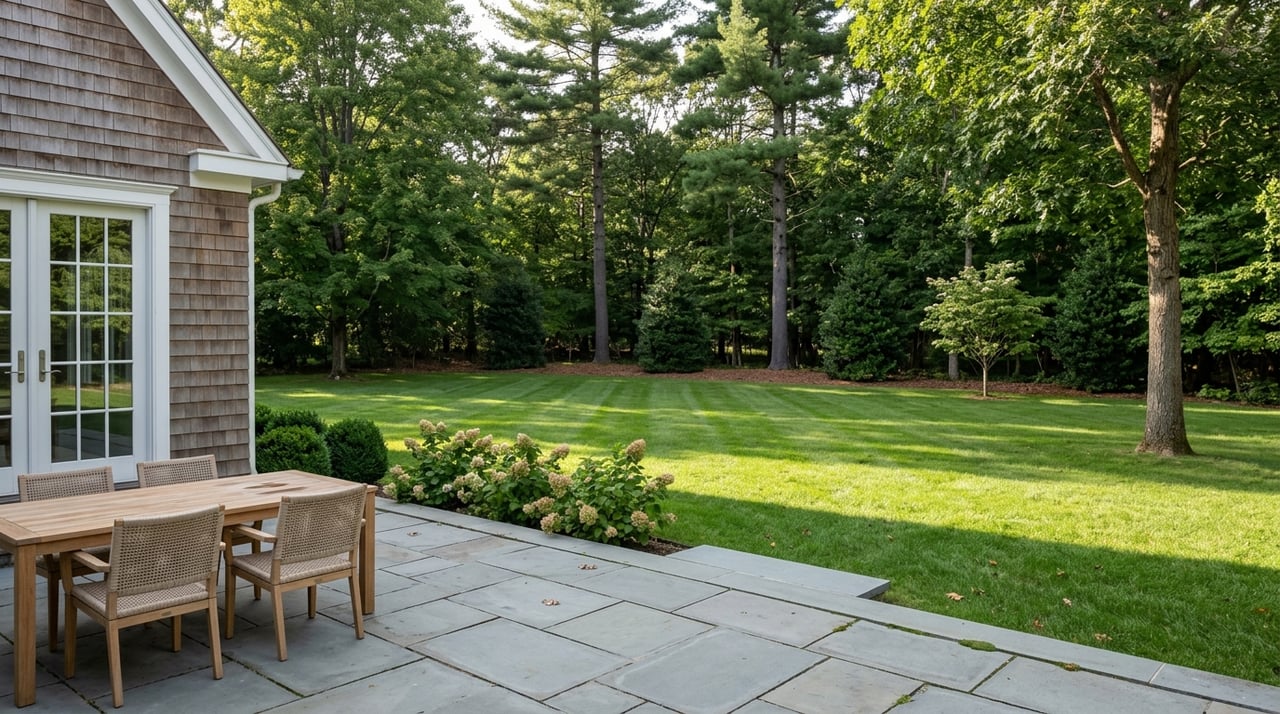
If you are picturing two acres in Weston as endless lawn and total isolation, the reality is more nuanced and a lot more livable. Life here often blends privacy at home with a surprisingly active civic rhythm around town. If you are considering a move to Weston, this guide will help you understand what daily life with two acres in 06883 can really look like. Let’s dive in.
What Two Acres Means in Weston
Weston describes itself as a residential community about 45 miles from New York City with minimal commercial development and no heavily trafficked commercial roads. The town’s land-use pattern is largely rural residential, and that shapes how two-acre living feels day to day. You get more visual breathing room, more yard space, and less of the tight-lot pattern common in denser suburbs.
In Weston’s R-2A Two Acre Residential and Farming District, single-family homes are permitted, with no more than one principal building per lot. The zoning rules include a 50-foot front setback, 30-foot side and rear setbacks, and maximum building coverage of 15%. In practical terms, that often supports a lifestyle centered on space, privacy, and room to use the outdoors in a more flexible way.
How Home Life Feels Day to Day
On two acres, your property tends to be part of your routine in a way it may not be on a smaller lot. You may spend more time thinking about lawn care, tree maintenance, drainage, and seasonal outdoor work. That extra responsibility is part of the tradeoff for having more room around you.
Weston’s open-space network adds to that feeling. The town says 3,847 acres, or about 29% of Weston’s land, are parks, open space, and conservation lands. That helps preserve the rural character many buyers are looking for, and it reinforces the sense that nature is part of daily life here, not just a weekend destination.
Wells, Septic, and Property Stewardship
One of the biggest practical differences in Weston is that, with few exceptions, households and most buildings rely on wells and private septic systems. The town’s 2020 plan also notes that Weston does not have a general sewer system beyond the school system’s closed treatment setup. That means homeownership here often comes with a more hands-on stewardship mindset.
For many homeowners, that includes paying attention to water use, septic upkeep, and landscaping choices that support drainage and water quality. Weston’s stormwater guidance points homeowners to septic care and conservation landscaping resources, and the town’s permit structure separately identifies new wells and new septic systems through the health district. If you are comparing Weston to a sewered town, this is one of the clearest lifestyle differences to understand up front.
What upkeep may include
- Regular mowing and seasonal yard cleanup
- Tree and branch management
- Watching drainage patterns after storms
- Monitoring well and water-use needs
- Staying on top of septic maintenance
None of that has to feel overwhelming, but it does mean two acres usually comes with more ongoing attention than a smaller, lower-maintenance property.
Why Weston Still Feels Connected
A common misconception is that larger lots automatically mean a disconnected lifestyle. In Weston, the opposite can be true. The town’s layout creates privacy at home, while shared destinations and local organizations create connection when you want it.
Weston’s Town Center is the main commercial and gathering hub. According to the town, it is where residents find the local market, bank, dry cleaner, real estate office, post office, spirits shop, restaurant, and gas and service station. Town Hall, the Library, and the four-school campus are also nearby, which gives daily life a distinct center of gravity.
Running Errands in 06883
In a town with limited commercial development, a small number of places do a lot of work. That often makes errands feel simple and familiar rather than sprawling. You are less likely to think in terms of big retail corridors and more likely to think in terms of a few reliable local stops.
Weston is also best understood as a car-first community. Census QuickFacts lists a mean travel time to work of 46.6 minutes, and the town’s overall pattern of limited commercial roads supports the idea that driving is a routine part of life here. For many buyers, that is not a drawback so much as part of the rhythm of choosing a lower-density setting.
Recreation Is Part of the Routine
Even with a rural residential feel, Weston offers a full calendar of recreation. The Parks & Recreation Department maintains Bisceglie-Scribner Park, Morehouse Farm Park, the Middle School Pool, municipal tennis courts, playing fields, and new pickleball courts at Bisceglie-Scribner Park. The department also offers summer camps, after-school classes, aquatics, and sports programs.
That mix matters because it gives structure to everyday life beyond your property line. You can enjoy the quiet of a large lot and still have easy access to organized activities, public facilities, and seasonal programs. For many households, that balance is part of what makes Weston attractive.
Outdoor options close to home
- Bisceglie-Scribner Park
- Morehouse Farm Park
- Middle School Pool
- Municipal tennis courts
- Pickleball courts
- Playing fields
Nature and Open Space Shape the Lifestyle
Weston’s parks-and-nature network deepens the outdoor lifestyle that two-acre buyers often want. The town highlights Lachat Town Farm and access to Devil’s Den Preserve as part of that network. These are not just scenic assets on a map. They help define how the town feels.
The town says Devil’s Den is the largest continuous preserve in Connecticut and the largest tract of protected land in densely developed Fairfield County. Lachat Town Farm is a 42-acre working farm dedicated to public and educational use. Together, they reinforce Weston’s agricultural roots and its open-space identity.
Community Life Goes Beyond Your Lot
Living on two acres does not mean your world ends at your driveway. Weston has a strong culture of participation, and that can shape daily life as much as the land itself. The town points to a long history of volunteerism, with residents serving on boards and commissions and with the Volunteer Fire Department and EMS Squad playing major roles.
The town also highlights organizations such as the Weston Historical Society, Kiwanis, Weston Women’s League, Weston Garden Club, the League of Women Voters, and the Block Captain program. That kind of civic structure often helps neighbors get to know each other through shared efforts and town life rather than through density alone.
Arts, Events, and Shared Spaces
Weston also supports an active arts presence. WestonArts is a volunteer nonprofit dedicated to fostering the arts in the community, and it has hosted events including the Weston Fine Arts Festival, the Red White & Blues concert at the Memorial Day Fair, and Verses. The town describes Weston as having a vibrant arts community.
This is an important part of the two-acre lifestyle story. You can have space and quiet at home without giving up the chance to participate in events, programs, and shared traditions. In Weston, that balance often defines the appeal.
Support Services in Town
For some households, daily life also includes access to town-based support resources. The Weston Senior Activities Center at 9 School Road is open Monday through Friday and serves as a hub for programs, activities, and events for older residents. Human Services at the Town Hall Annex provides referrals, energy assistance, food-pantry screening, Meals on Wheels coordination, and related support programs.
These services help round out the picture of Weston as more than just a collection of large residential lots. It is a town with a civic core, public resources, and an infrastructure of support that serves residents at different stages of life.
The Real Tradeoff of Two Acres
The strongest case for two-acre living in Weston is not just that you get more land. It is that you get a specific combination of privacy, open space, and connection to a small-town civic network. Your home life may feel quieter and more spread out, while your community life still has clear centers through Town Center, recreation programs, volunteer groups, and public spaces.
The tradeoff is real. Two acres usually means more upkeep and more driving. But for many buyers, that is a fair exchange for outdoor room, lower-density surroundings, and a town where shared institutions still play a visible role in everyday life.
If you are weighing whether Weston fits your lifestyle, the answer often comes down to how you want your days to feel. If you value privacy at home, room to spread out, and a town built around open space and community touchpoints, Weston’s two-acre lifestyle may be exactly what you are looking for. When you are ready to talk through neighborhoods, homes, and what day-to-day living might look like for you, the Marion Filley Team is here to help.
FAQs
What does two-acre zoning mean for daily life in Weston, CT?
- In Weston, two-acre zoning generally supports single-family homes with more yard space, visual privacy, and a lower-density rural residential feel.
What home maintenance should you expect with two acres in Weston?
- Many homeowners should expect more hands-on outdoor upkeep, including mowing, tree care, drainage awareness, and attention to well and septic maintenance.
Are most Weston, CT homes on public sewer and water?
- No. With few exceptions, households and most buildings in Weston rely on wells and private septic systems, and the town does not have a general sewer system.
Where do residents run errands in Weston, CT?
- Weston’s Town Center is the main hub for everyday errands, with services such as the local market, bank, dry cleaner, post office, restaurant, and gas and service station nearby.
Is Weston, CT a car-dependent town?
- Weston is best understood as a car-first community, with limited commercial development and a reported mean travel time to work of 46.6 minutes.
What recreation options support day-to-day life in Weston?
- Weston offers parks, playing fields, tennis courts, pickleball courts, the Middle School Pool, and Parks & Recreation programs that include camps, sports, aquatics, and after-school activities.
How does open space affect the lifestyle in Weston, CT?
- Open space is a major part of Weston’s identity, with 3,847 acres of parks, open space, and conservation land that help preserve the town’s rural character and outdoor feel.
What makes community life active in Weston despite larger lots?
- Weston’s civic life is shaped by Town Center, public programs, volunteer organizations, arts events, and shared institutions that help residents connect beyond their individual properties.